
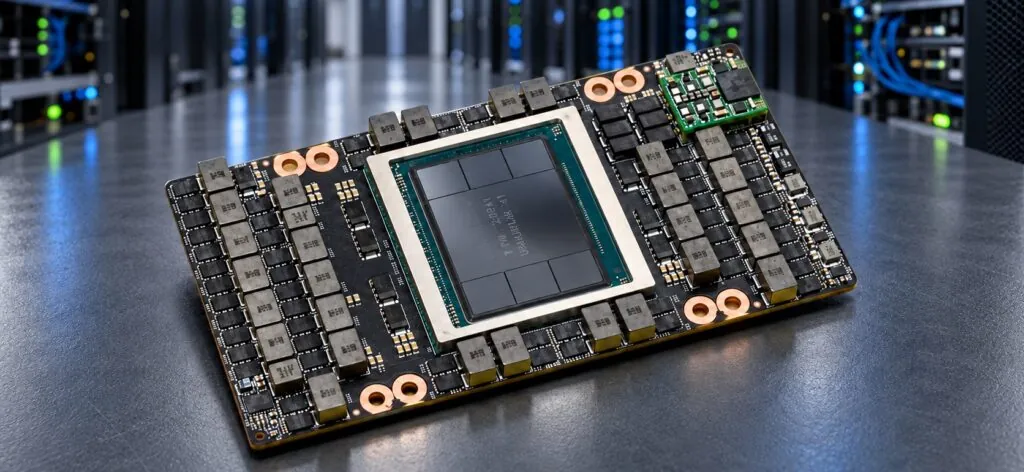
Data center H100 GPU
TL;DR: TL;DR: Gartner expects more than 80% of GPU cloud companies to be merged or shut down by 2030, partly because their chips may be replaced before they pay off. This article checks the hardware side of that warning. Older GPUs are still in demand: one-year H100 rents rose almost 40% in five months, and a 2020-era A100 is booked into 2029. That supports used data center GPU value today, though it can’t show whether the companies renting those GPUs out will survive.
On October 14, Gartner published a forecast that the AI hardware world noticed at once. By 2030, it said, cost pressure and the lack of anything to set them apart will force over 80% of neocloud providers to cease independent operations. In plain terms, more than four out of five will shut down or be absorbed by someone larger. Neoclouds are the GPU cloud companies, such as CoreWeave, Nebius and Lambda, that buy Nvidia accelerators in bulk and rent them out by the hour or on multi-year contracts. CoreWeave shares fell as much as 17% that day.
For anyone who buys, runs or sells this hardware, the useful question is narrower than Gartner’s. A company’s survival depends on its debt, its customers and its margins. A GPU’s value depends on how long it keeps finding paid work, and that is what sets used data center GPU value.
What Gartner is warning about
Gartner’s case rests on several pressures at once. It expects AI providers to spend about $7 trillion on AI infrastructure from 2026 through 2030. Covering that, plus financing costs and a 12% return on invested capital, would take about $8.5 trillion in revenue, and Gartner forecasts no more than $3.6 trillion. Most of that revenue, it adds, will be earned by companies that sell AI models and apps while renting their computing power, not by the companies that own the GPUs.
One part of the argument is about the hardware itself. Gartner analyst Will Sommer said spending on AI cloud capacity will grow too slowly “for most AI compute providers to recover their AI investments before the current generation of AI semiconductors is replaced.” The release calls the GPUs “rapidly depreciating assets.”
A GPU cloud works much like a car rental company that borrows money to buy its fleet. It needs each car to earn back its price before newer models make it hard to rent, and it also needs to cover its loans, its lots and its staff. Most of Gartner’s forecast can’t be checked until 2030. The hardware part can at least be looked at today, through what older GPUs rent for. Rents can’t show how long a GPU will keep earning or whether its owner recovers the cost, but they do show whether customers still want it.
What older GPUs rent for now
Over the past year, those rents have gone up.
On Nvidia’s May earnings call, its CFO said, “the price of renting an H100 has risen 20% year-to-date, while A100 cloud pricing is up nearly 15%.” Contract prices moved more. SemiAnalysis, which tracks one-year H100 rental deals, recorded a rise from $1.70 per GPU-hour in October 2025 to $2.35 in March 2026, almost 40%. It found H100s being renewed at the same rates they were signed at two to three years earlier. Half the providers it asked had no H100 or H200 capacity to offer at all.
Even older hardware is still working. In August, CoreWeave said the company had signed an A100 contract that extends into 2029 at an attractive price, and its September investor presentation lists the A100 renewal as running into 2029. The A100 launched in 2020. Lambda still lists V100 instances at $0.79 per GPU-hour, for a card Nvidia introduced in 2017, which is about two-fifths of what an A100 rent for at the typical GPU cloud.
Public on-demand listings point the same way. GetDeploying, which tracks the listings of 40 providers, reports that its median H100 listing rose 18% over the past year and 5% in the four weeks to October 12. Those are movements in tracked listing medians rather than prices actually paid, and the tracker notes that a median can shift when providers add or drop listings. It also splits prices by type of seller: specialist GPU clouds, and the hyperscalers, meaning Amazon, Microsoft and Google.
| GPU | Median at GPU clouds ($/GPU-hour) | Median at hyperscalers ($/GPU-hour) |
|---|---|---|
| A100 | $2.00 | $3.67 |
| H100 | $4.50 | $7.89 |
| H200 | $5.40 | $10.85 |
| B200 | $8.55 | $14.24 |
On-demand listing medians from GetDeploying, mid-October 2026. Reserved and spot rates run lower. The B200 is Nvidia’s current Blackwell generation; the H100 and H200 are the generation before it.
Why old GPUs keep earning
New capacity is hard to get. Nvidia said on its August call that supply will remain a bottleneck at least through the end of its fiscal 2028, which closes in early 2028, and that its compute is fully utilized across every cloud it serves. New systems have also become more expensive to build. Racks built on Vera Rubin, the generation after Blackwell, are estimated to cost about double what Grace Blackwell racks did, with memory the largest single part of the increase. When the newest hardware is scarce and expensive, buyers take the generation before it.
The companies’ accounting reflects the same view, with a caveat about what it covers. Nebius extended the useful life of its servers and network equipment from four to five years as of January 1, 2026. CoreWeave has used a six-year life for its computing equipment since 2023, and Amazon went the other way in 2025, shortening part of its server life from six years to five. These are accounting schedules for broad asset categories, not measured GPU lifetimes. The A100 contract supports the longer view, but it is one contract, and a chip design that stays in demand for nine years says little about how long any single card lasts.
Hardware demand versus provider economics
Firm rents and Gartner’s warning can both be true, because rent is only revenue. A provider still has to pay for the servers and networking around each GPU, the power and floor space, and the interest on the money it borrowed, and then earn a return on top. A company can keep every GPU rented and still fall short of that.
The table also shows a wide gap in listed prices. The same H200 lists for about half as much at a specialist GPU cloud as at a hyperscaler. The two aren’t selling identical products, since networking, software, support and contract terms differ, so the gap on its own says nothing about either side’s margins.
Consolidation doesn’t have to idle the hardware, either. If a neocloud is acquired, it counts toward Gartner’s 80%, while its GPUs can keep running for the new owner. The forecast is about who owns the fleet. Used GPU value depends on whether the fleet still has work.
That work may get harder to find later. Nvidia began production shipments of Vera Rubin in August. If Rubin capacity grows faster than demand, older GPUs would likely move down a price tier. Today the A100 lists for less than half the price of an H100, which shows how far apart two generations can sit. Nvidia’s own supply outlook suggests that point may still be some way off.
What this means for used data center GPUs
There is no public exchange for used data center GPUs, and published resale estimates are sparse. Mercatus, which says it tracks broker, trade-in and auction sales, estimated H100 SXM5 cards (the high-power module that mounts on a server’s GPU board) that are 18 to 30 months old at $22,500 to $25,500, a range it last verified on June 23. New H100s held at $25,000 to $40,000 from mid-2024 into early 2026. None of the sources reviewed for this article gives a time series of used H100 prices detailed enough to show which way they are moving.
Provider trouble could still reach used prices by a different route. If consolidation brings distressed sales, a lot of used inventory could reach the market at once and push bids down, even while operating GPUs keep their customers. That is a possibility, not something the market data shows yet.
As an illustration only, SemiAnalysis’s March contract rate of $2.35 an hour, billed every hour of a year, comes to about $20,600 in gross revenue per H100. That ignores idle time, power, the server around the card and the cost of capital, so it is not a payback figure. It does show why a used H100 still draws buyers while rents stay firm.
For hardware already in service, the decision depends on how busy it stays. An earlier guide to cloud, on-premises and hybrid GPU setups made the general case: owned hardware suits steady, predictable workloads, while cloud GPUs suit short-term or exploratory work. The July analysis of renting versus owning GPUs worked an example. It assumed a used 8-GPU H100 server at $165,000, about $2,500 a month to operate, and Lambda’s $3.99 on-demand rate, and found that owning paid back in about 14 to 15 months at 60% utilization. Different prices would move that threshold.
For organizations planning to retire A100 or H100 servers in the next year, the sale will happen while Rubin supply is growing. Rents are firm today, and how buyers price these cards as Rubin volume builds is still open. Getting a quote from a buyer of used GPUs early in the refresh plan leaves the most room to choose when to sell.
The number to watch
For used hardware, the signal is H100 rents as Rubin supply grows, watched in two places that shouldn’t be mixed: one-year contract prices such as SemiAnalysis’s index, and on-demand listings such as GetDeploying’s medians. Rents that hold in both through 2027 would show continuing demand for older GPUs, whatever happens to the companies that own them. Rents that fall steadily as Rubin capacity comes online would show pressure on older hardware’s earning power. That pressure is still a different thing from proof that owners failed to recover their investment, since some of that hardware will already have paid for itself, and some may stay profitable at lower rates.